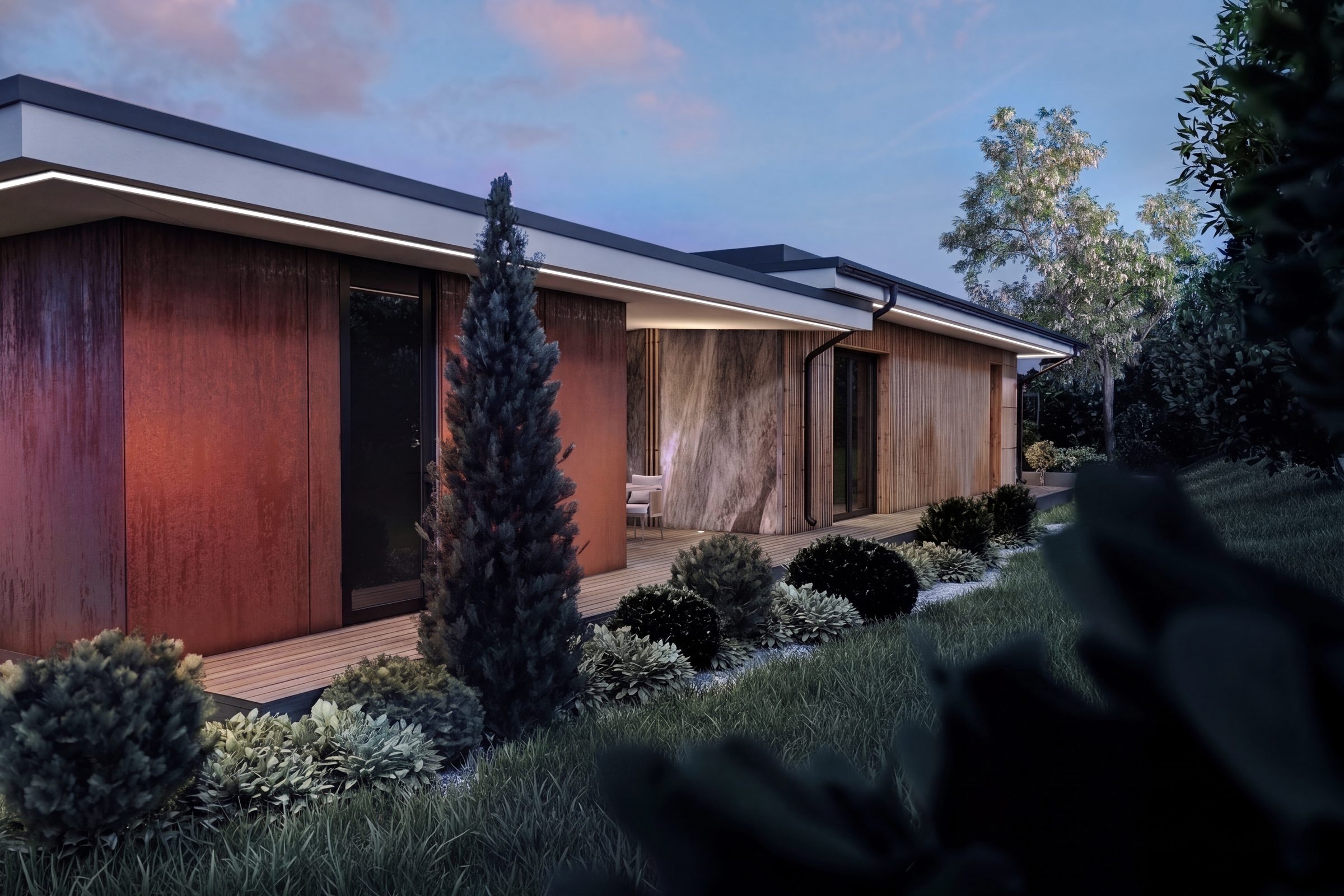
A ninety-day delivery is possible only when the project is treated as one coordinated product. The architecture, structure, engineering, factory production and site work follow one schedule instead of being negotiated with unrelated contractors as problems appear.
1. Brief, plot and design
The process begins with the family’s needs and the conditions of the plot. We confirm area, number of storeys, orientation, access for delivery and the available utilities. The design stage coordinates architecture with the structural and engineering systems, so changes are resolved before production.
2. Price and specification are fixed
Once the agreed solution is documented, the contract records the scope, price and schedule. This is the point where ambiguous phrases such as “standard finish” must become a specific list of materials and works. Plot-related items are identified separately so the client can see which assumptions affect the final budget.
3. Factory production and site preparation run in parallel
The home envelope is produced in controlled conditions in Brașov while the site and foundation are prepared in Moldova. Parallel work saves time, but only when dimensions and connection points are coordinated in advance. Each element is made for its exact position in the project.
4. Delivery and assembly
The prepared elements arrive on site in a planned sequence. The thermal envelope is assembled rapidly, reducing the period when materials are exposed to weather. Windows, roof interfaces and airtight junctions are treated as parts of one system rather than separate subcontractor tasks.
5. Engineering, finishes and handover
After the envelope is closed, the engineering systems and finishes are completed and checked. Handover includes the agreed documentation, warranty obligations and an inspection against the specification.
Speed is the result of preparation and repeatable processes. It does not mean skipping design, drying time or quality checks.
What the client sees during the process
Progress is documented so the owner can follow production and assembly without managing the site every day. Decisions are grouped into clear stages, which keeps the project moving and leaves a traceable record of approvals.