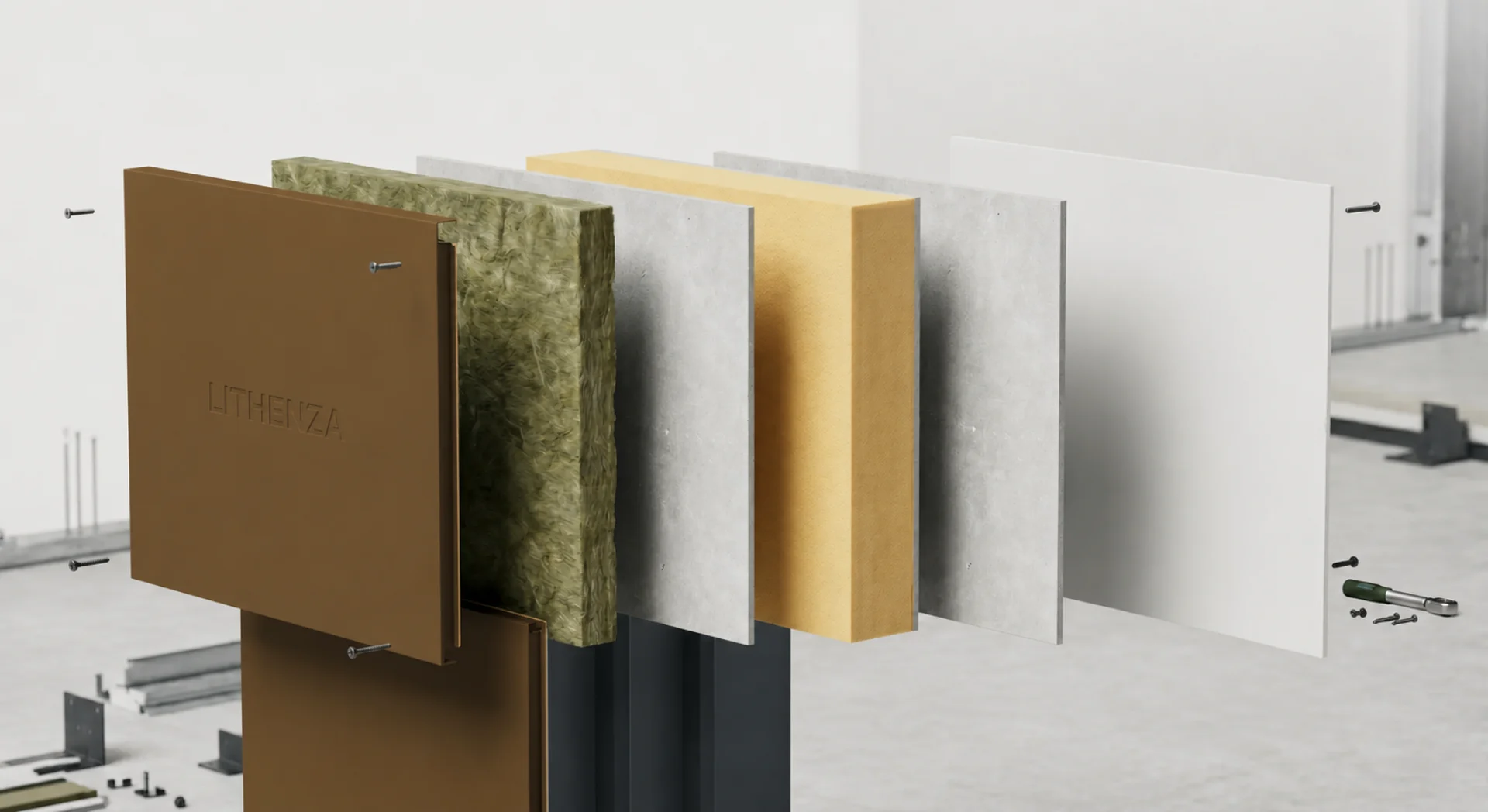
A comfortable low-energy home is created by several systems working together. Insulation limits heat flow, airtight junctions prevent uncontrolled drafts, high-performance windows reduce weak points and ventilation supplies fresh air without throwing away most of the heat already inside.
The thermal envelope must be continuous
Good performance is lost at gaps: wall-to-roof connections, window installation zones and service penetrations. LITHENZA details these junctions as part of the engineered envelope. The goal is not only a high insulation value on paper, but consistent performance around the whole building.
Airtight does not mean stuffy
A traditional leaky house receives air through random cracks. The quantity changes with wind and weather, and the incoming air is neither filtered nor controlled. In an airtight home, ventilation becomes an engineering task. Fresh air is supplied where people live and stale air is removed from wet rooms.
Heat recovery reduces ventilation losses
A heat-recovery unit transfers much of the heat from outgoing air to incoming fresh air. The two air streams do not mix. The result is stable air renewal with less energy demand and without relying on permanently open windows in winter.
What residents notice
- More even temperatures between rooms.
- Fewer cold surfaces and drafts.
- Filtered fresh air and controlled humidity.
- Lower heating and cooling demand than a conventional home.
Actual consumption still depends on area, indoor temperature, occupancy and equipment. That is why energy performance should be discussed as a whole-building design rather than a single marketing number.